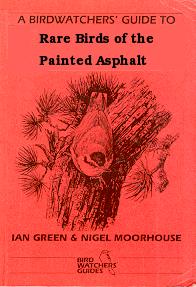
Welcome to another edition of a bird watchers companion. This time we will tackle the much anticipated release of a new guidebook. Common Sounding Species of North America. For all watchers of the common sounding species this guide will try and outline the distinctive look and attitudes to the serious hobbyist. While many people do not like this particular branch of bird watching due to the rather loud cracking sounds associated with these breeds, I hope after reading you will feel different. In the end if you still cannot appreciate these animals you will at least be able to correctly spot and identify them as they pop in and out of your everyday life.
The Knuckle Popping Knutter - While it is a rather regal looking bird you will probably hear it long before you see it. As you would imagine, the Knutter gets its name from its near compulsive knuckle popping. If it is not using its claws to open a seed or groom its feathers you will hear it cracking away day and night. Every waking moment the Knutter is a knuckle popping fool. It is unaware that many people find the habit quite unpleasant and will crack every last toe joint before pausing briefly and then starting up again.
The Back Cracking Buckler - The Back Cracking Buckler appears to always be in pain, crouched over with its wings on its hips. While it is an interesting bird its constant groaning makes a lot of watchers wary of approaching it. It can be seen near any stable structure, trying desperately to maneuver around and push itself against it, in hopes of correctly popping its back to a point of working order. In truth there is little it can do for itself, not that it will listen to you. Many watchers have claimed, though reports haven’t been confirmed, that the Buckler spends a great deal of it’s time lamenting its condition and muttering about the good old days when it was younger.
The Magnificent Neckler - The Neckler is the closest thing the sounding species have to a death defying entertainer. The Neckler appears to be like any other normal bird, going about its normal activities, eating, flying and grooming. When suddenly the Neckler will rapidly throw its head to one side and a deafening crack will resonate from its neck. The Neckler will then look quite astonished as it fellow birds have either flow away in fright, cringed in alarm, or fainted from sheer terror. The Neckler has no desire to in any way alter this behavior and in fact if rather fond of the feeling that his head might fly off on the next attempt.
Theses are only a couple of the exciting species awaiting those who are aware and possess keen powers of observation. While we don’t have time to cover them all, there are many other wonderful foul that are part of the Common Sounding Species of North America. Farewell until next edition bird watchers and remember to keep your eyes open and your ears at the ready!